
Choosing between an oil-immersed and a dry-type transformer starts with where the unit will be installed, what it will supply, and which insulation and cooling arrangement fits the environment. Both families step voltage up or down through magnetic coupling, but they use different insulation media and suit different installation conditions. This guide summarizes the practical differences that procurement and engineering teams should weigh before requesting a quotation.
The core difference: insulation and cooling medium
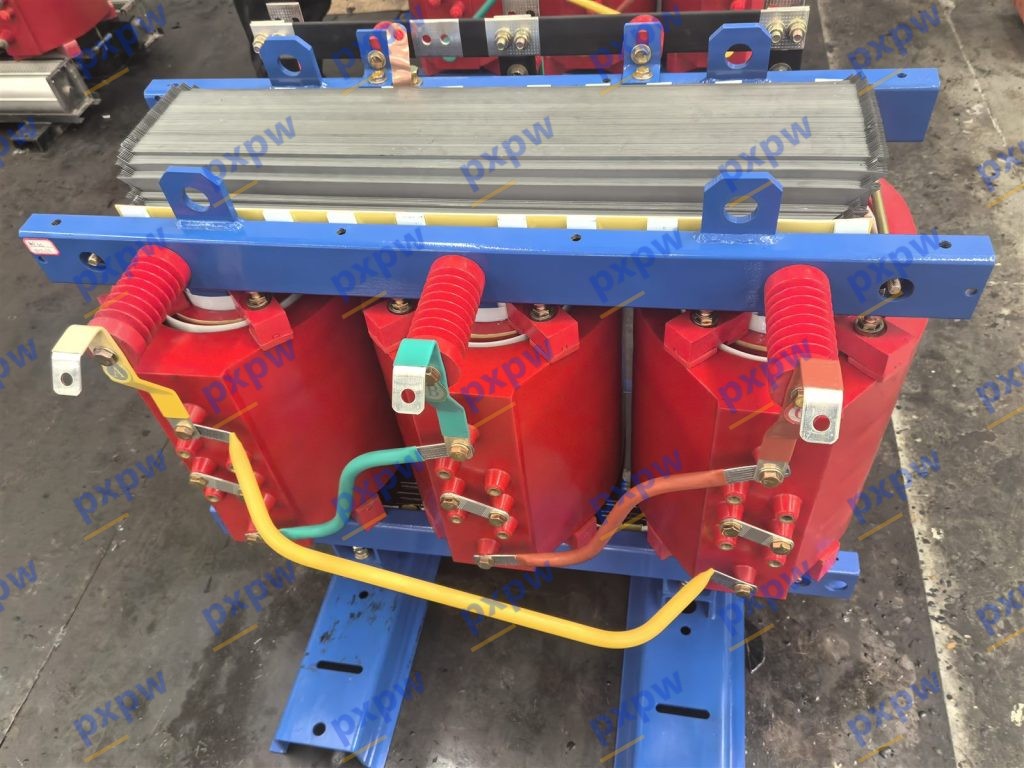
An oil-immersed transformer uses insulating mineral oil (or another approved insulation fluid) inside a sealed tank. The oil insulates the windings and carries heat away to the tank walls and external radiators. A cast resin dry-type transformer encapsulates the windings in epoxy resin and relies on air for cooling; there is no oil bath in the active part.
This single difference drives most of the downstream decisions: fire and spill considerations, indoor versus outdoor placement, noise, maintenance access, and the protection arrangement around the unit.
Oil-immersed transformers: typical duties
Oil-immersed units are widely used for distribution and substation supply where higher voltages, higher capacities or outdoor installation are involved. The oil provides effective insulation and heat dissipation, which supports compact winding designs and sustained thermal performance. The sealed tank and external cooling equipment are matched to the load and ambient conditions.
- Distribution networks: stepping down transmission or sub-transmission voltage for industrial, commercial and municipal distribution.
- Power stations and large substations: main power transformers connecting generators or grid feeders to the network.
- Outdoor and pad-mounted duties: tank-based units installed in substations, compound yards or outdoor enclosures where drainage and fire precautions can be provided.
Relevant products: oil-immersed distribution transformer and oil-immersed main power transformer.
Dry-type transformers: typical duties
Cast resin dry-type transformers are chosen where an oil bath is undesirable, especially indoors or in environmentally sensitive locations. The resin encapsulation protects the windings from moisture and dust, and air cooling removes heat through natural convection or forced ventilation. Because there is no oil to leak or spill, fire and housekeeping requirements are generally easier to manage in occupied or enclosed buildings.
- Indoor installations: factories, commercial buildings, tunnels, basements and indoor electrical rooms.
- Environmentally sensitive sites: locations where fluid containment or leakage risk is tightly restricted.
- Ventilated or protected enclosures: dry-type units are often placed in cabinets or rooms with adequate airflow and filtered ventilation.
Side-by-side comparison
|
Aspect |
Oil-immersed |
Dry-type (cast resin) |
|---|---|---|
|
Insulation medium |
Insulating oil in a sealed tank |
Epoxy resin encapsulation; air insulation |
|
Cooling |
Oil circulation through tank and radiators |
Air cooling, natural or forced ventilation |
|
Typical placement |
Outdoor substations, compounds, suitable indoor rooms with oil containment |
Indoor rooms, cabinets and environmentally sensitive sites |
|
Oil leakage risk |
Present; containment and fire precautions may be required |
No oil bath in the active part |
|
Maintenance focus |
Oil level, sealing, cooling equipment and periodic oil condition checks |
Ventilation, cleanliness of windings and enclosure inspection |
|
Ambient sensitivity |
Tank and oil system handle outdoor exposure with suitable protection |
Depends on enclosure; dusty, damp or corrosive environments need rated protection |
Questions to answer before selecting
- Installation location: Will the unit sit outdoors, in a ventilated room, or in an occupied indoor space?
- Fire and spill rules: Are local codes or site rules restricting oil-filled equipment inside buildings?
- Ambient conditions: Temperature, humidity, dust, corrosive atmosphere and altitude affect cooling and insulation rating.
- Load profile: Steady base load, occasional peaks, and the required overload and duty cycle determine thermal design.
- Voltage and capacity: Primary and secondary voltage, impedance and system short-circuit level must match the single-line diagram.
- Access and ventilation: Dry-type units need adequate airflow; oil units need space for radiators, maintenance and containment.
Common questions
Can a dry-type transformer be installed outdoors?
Only with an enclosure rated for outdoor exposure and suitable protection against weather, dust and wildlife. Indoor-rated resin units should not be left exposed without the correct housing.
Is an oil-immersed transformer always cheaper?
Upfront cost depends on rating, voltage, accessories, enclosure and testing. Oil units and dry-type units compete differently by duty; compare quotations on the complete specification, not the headline unit price alone.
Which type is safer for a basement or shopping mall?
Indoor occupied buildings commonly favor dry-type units where oil spill and fire risk are a concern, but the final choice must follow local electrical codes and the site’s fire and ventilation engineering.
Next step for your project
Prepare your single-line diagram, load estimate, voltage levels and installation environment, then request a quotation. Our range covers oil-immersed and dry-type transformers, integrated storage units and diesel generator sets for industrial, commercial and utility projects.