
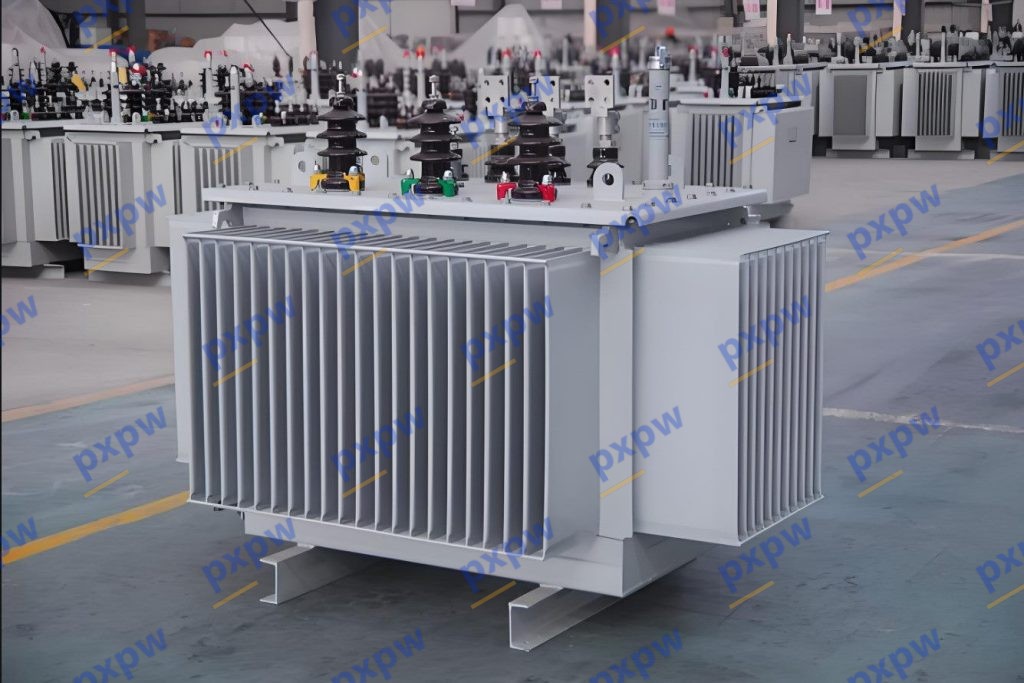
A clear transformer specification reduces quotation ambiguity and helps the supplier propose a unit that matches the installation rather than a generic catalog model. This guide lists the main items engineering and procurement teams should prepare before approaching a manufacturer of distribution transformers, main power transformers and related power equipment. Ratings and test values must be confirmed against the project single-line diagram and applicable standards; the checklist below is an organizing framework, not a substitute for detailed design.
1. Define the load and duty cycle
Start with what the transformer will supply and how hard it will run.
- Connected and operating load: steady demand, motor inrush and any future load margin the site expects to add.
- Duty cycle: continuous base load, occasional peak loading, or cyclic industrial loads that raise average winding temperature.
- Load type: linear and non-linear loads, rectifiers, variable-frequency drives or switching equipment can affect harmonic and thermal design.
- Power factor and voltage tolerance: the required secondary voltage and allowed fluctuation under load.
2. Voltage, ratio and system requirements
Record the system electrical parameters that determine winding design and insulation level.
- Primary and secondary voltage, and whether tap adjustment (off-circuit or on-load) is required.
- System frequency (50 Hz or 60 Hz) and the relevant grid or installation standard.
- Impedance requirement agreed with the protection and short-circuit study.
- Short-circuit level the unit must withstand at the connection point.
- Neutral arrangement and grounding requirements for the installation.
3. Cooling and installation environment
The cooling method and enclosure follow where the transformer physically sits.
- Location: outdoor substation, indoor electrical room, cabinet, basement or environmentally sensitive building.
- Ambient conditions: maximum and minimum temperature, humidity, dust, salt or corrosive atmosphere, and altitude.
- Cooling class: oil-immersed natural/forced cooling, or air-cooled dry-type ventilation arrangement, matched to the duty.
- Enclosure and protection: tank design, enclosure degree of protection, weatherproofing, and any fire or spill containment required on site.
4. Protection and accessories
List the devices the project expects on or alongside the transformer. Common items include pressure and temperature protection, oil-level indication, cooling fans or pumps, tap changers, busbar or cable terminations, monitoring sensors, and connection hardware. Whether accessories are mounted on the unit or supplied separately should be stated in the enquiry.
5. Standards, testing and documentation
State the standard the unit should follow and the factory tests or documents required. Typical items procurement teams ask about include routine test reports, insulation and winding resistance checks, ratio and polarity verification, temperature-rise or special tests where required, nameplate drawings, assembly and terminal drawings, packing and shipping documents, and warranty terms. Exact test schedules depend on the voltage, rating and destination market; confirm them with the manufacturer and the project’s inspection engineer.
6. Commercial and site information to prepare
- Destination country and site conditions, including climate and any import certification requirements.
- Required delivery window, shipping terms and whether the supplier arranges export packing.
- Spare parts, commissioning support and after-sales expectations.
- Any preferred language for drawings, nameplates and technical documentation.
Common questions
What minimum information do I need to get a usable quotation?
At minimum: primary and secondary voltage, frequency, capacity or load estimate, oil-immersed or dry-type preference, installation location and ambient conditions, and required standards. The more complete the single-line diagram and load study, the closer the quotation will be to the final design.
Should I specify a capacity larger than today’s load?
A margin for future load may be sensible, but oversizing changes losses, impedance and cost. Base the margin on a realistic load-growth plan rather than a rough estimate.
How do I handle non-linear loads?
List drives, rectifiers and other switching loads so the supplier can advise on harmonic consideration, thermal rating and cooling design rather than sizing the unit on average current alone.
Prepare your enquiry
Gather the single-line diagram, load summary, voltage levels and site environment, then send them through the contact page. Browse the product range to see the available oil-immersed distribution, main power and dry-type transformer families.